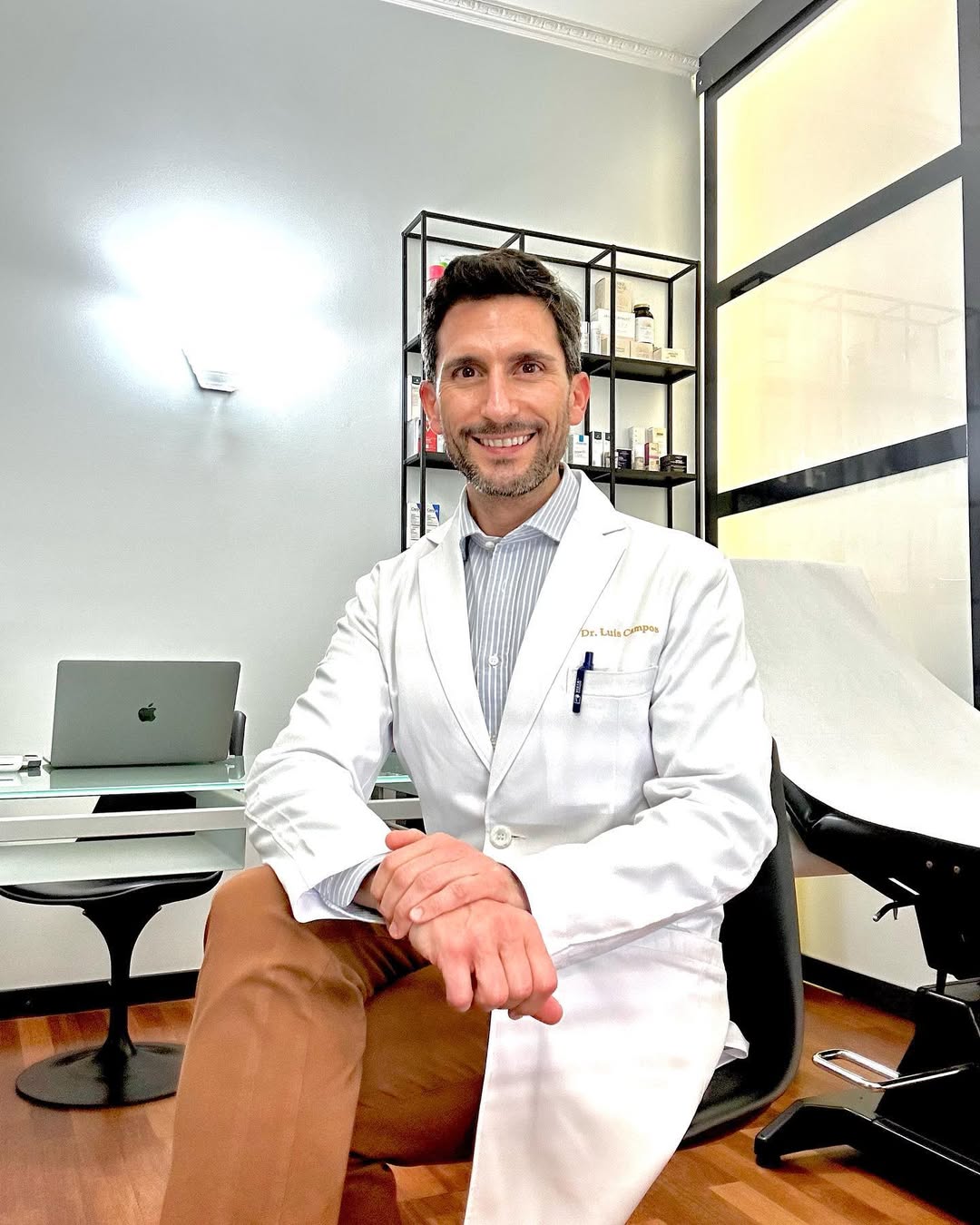
In Milan, where beauty and design share the same language, Dr Luis Campos stands as one of the city’s most distinctive aesthetic voices. His journey began in the world of oncology and reconstructive surgery, where every gesture demanded precision, empathy, and artistry. From those early years dedicated to restoring the human form, he developed an understanding of beauty that transcends aesthetics. To him, beauty is an act of care, an intimate conversation between science and emotion.

Over the years, Dr Campos has evolved from surgeon to visionary, from specialist to storyteller. Today he is one of Italy’s most recognized figures in the field of aesthetic medicine, admired not only for his refined surgical approach but also for his ability to translate complex ideas into accessible reflections on self-expression and confidence. Through his digital presence and popular YouTube channel, he shares a culture of beauty rooted in knowledge, sensitivity, and timeless style, reaching an audience far beyond the clinical space.

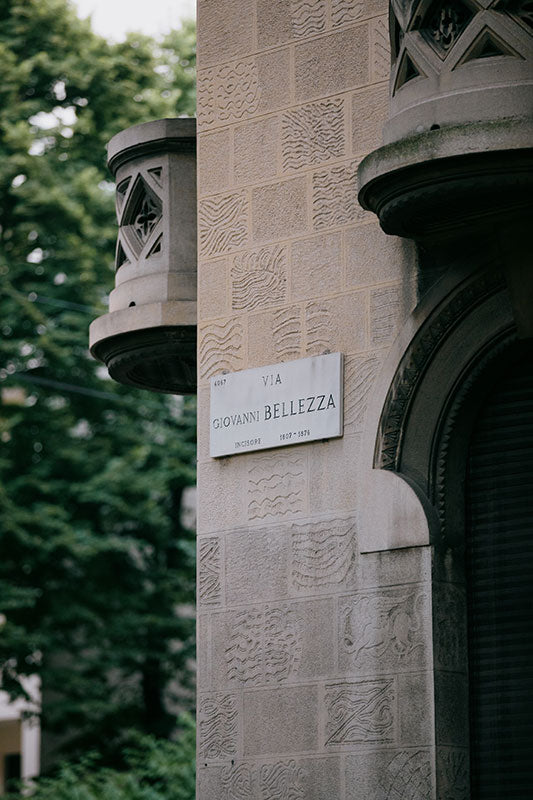
His latest work, Via Bellezza, is an ode to Milan, the city that became both his muse and his mirror. Through a series of essays, photographs, and reflections, the book captures the geometry of Milan’s architecture, the poetry of its streets, and the elegance of its inhabitants. It invites readers to rediscover beauty as a form of dialogue between structure and soul, proportion, and personality. Campos reveals how the city’s balance of restraint and creativity continues to inspire his aesthetic philosophy and his practice.
Ladies and gentlemen, welcome once again to Dr Campos on our channel. We are sitting down with him to talk about Via Bellezza, a book that reveals his artistic vision and philosophy of beauty, and to celebrate its release we will also launch a special giveaway for our readers.


Dr Luis Campos speaking about the dialogue between medicine and art.

After years of working with faces, forms, and emotions, what led you to translate your philosophy into a printed piece? What made you feel that Via Bellezza had to exist as a book rather than a digital project or a visual series?

For many years my work lived in a digital space — quick, dynamic, constantly moving. But beauty, at least the way I understand it, asks for the opposite. It asks for silence, slowness, and a different kind of attention. At a certain point, I felt the need to create something that could not be scrolled: something that would resist the speed of our screens.

Via Bellezza had to exist as a physical book because the experience it offers is tactile before it is visual. The weight of the pages, the rhythm of the photographs, the way light touches the paper — all of this is part of the message. I wanted readers to hold a thought, not just see it.

At the same time, I know many people discover stories through digital reading first. That’s why I recently released an e-book edition containing only the written reflections without the photographic journey. It is a way to enter the world of Via Bellezza, to read the ideas and the philosophy, and perhaps feel curious to experience the complete, physical version.

So the heart of the project is still the printed book, but the e-book is a gentle doorway into its universe a way to meet the words before meeting the object.

HIS SELECTION

“Milan reveals beauty through geometry, restraint, and small details that appear only when you slow down."

Dr. Luis Campos discussing his new book on holistic beauty

Via Bellezza feels more like an art object than a manual. The imagery, the reflections, even the rhythm of the pages invite contemplation. What was your vision behind this approach, and how did you want readers to experience it?

I never wanted Via Bellezza to teach something in a didactic way.

I wanted it to evoke something.

Milan itself suggested this approach. It is a city that reveals beauty through geometry, restraint, and small details you notice only when you slow down. The book follows the same rhythm: it doesn’t tell you what beauty is, it invites you to look for it in your own way.

My hope is that readers experience the book almost like a walk — one of those slow, intentional walks you take when you’re open to being surprised.
You pause, you return to a page, you follow a line of light in a photograph, you reflect on a sentence that feels unexpectedly personal.

Via Bellezza is not a manual because beauty, to me, is not a formula. It is a dialogue. And the book is my side of that conversation.

You created a curated playlist accessible only through a QR code printed inside the book, turning it into an immersive, multi-sensory experience. What inspired you to add this dimension, and what role does sound play in your creative process?

When Via Bellezza was finally printed, I felt proud of its form — but also aware of something important: creating a book of this quality, with original photography, refined graphic design, and artisanal printing, inevitably makes it a precious object.

I wanted to make sure that readers who invested in it received not just a book, but a lasting experience.

That is how the idea of the exclusive YouTube playlist was born.

At the end of the book, a QR code gives access to a private series of twelve videos — one released on the first Sunday of each month. It is a space I created only for those who own Via Bellezza, as a way of continuing the conversation beyond the pages.

Each episode offers a different perspective on beauty, culture, or the stories connected to the book. Some are intimate reflections on skin and neuroscience; others are conversations with people whose worlds intersect with mine. For example, I walk through the history of Milan inside Barbieria Colla with its owner, exploring a century of style and society; or I sit with Sandra Nassima, founder of Depuravita, to speak about integrative approaches to beauty and wellbeing.

The mood is always the same: calm, thoughtful, designed for a quiet Sunday afternoon with a coffee in hand — the same atmosphere in which I hope readers will enjoy Via Bellezza inside their home.

In this way, the playlist becomes the book’s “living” dimension.
The photographs remain still and timeless on the page, while the videos allow the philosophy behind Via Bellezza to continue unfolding, month after month.

Your path has always blended science, aesthetics, and culture. What are your next projects or ideas that continue this dialogue between medicine, art, and the evolving meaning of beauty?

I believe the future of beauty lies in longevity — not as a promise of eternal youth, but as a deeper understanding of how to help the skin age with intelligence, balance, and grace.

My next projects continue in this direction: exploring how biology, technology, and culture can work together to support the skin through time.

I am developing new editorial work dedicated to longevity skincare, expanding the themes I began in Via Bellezza, and creating content that unites scientific clarity with an emotional, human approach.
At the same time, I’m working on tools and experiences — digital and physical — that help people navigate beauty with more self-awareness and less pressure.

My aim is always the same: to create a language of beauty that respects both the person and the science, and that evolves with the world around us.